Henry Dannell Opens DIFC Office for Cross-Border Credit Advice
The UK adviser’s Dubai office targets clients with borrowing needs across jurisdictions, while its representative status limits the services it can provide locally.
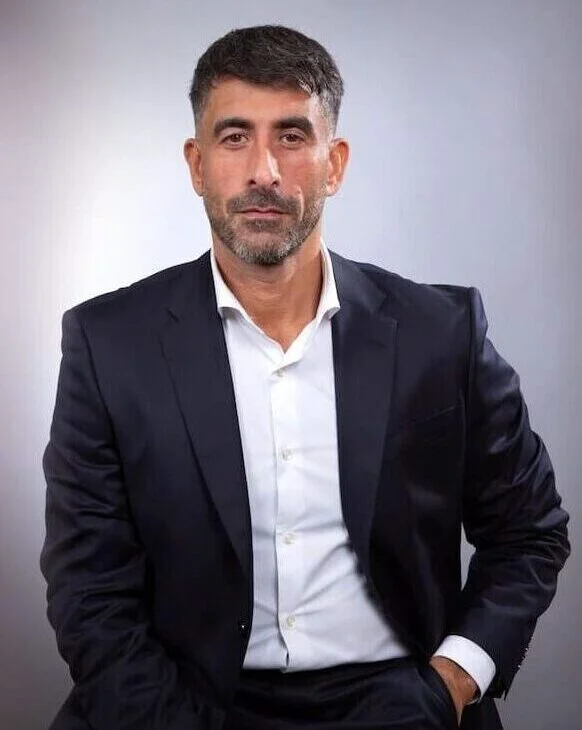
Henry Dannell’s Dubai International Financial Centre (DIFC) office gives the UK-based credit adviser a local presence among internationally mobile entrepreneurs, family offices and high-net-worth individuals. The firm says these clients often have borrowing needs that span several jurisdictions. Its Dubai operation is a representative office, so the opening establishes a base for client relationships while leaving the scope of local regulated activity limited.
Founded in 2019, Henry Dannell describes itself as a specialist structurer of bespoke credit solutions rather than a conventional mortgage provider. Its advisory team says it has over 165 years of combined industry experience and works on residential, commercial and specialist lending. The firm focuses on clients whose income profiles or assets do not fit standard lending approaches, including people with income or property distributed across borders.

A local base for complex borrowing needs
The office operates as a representative of Henry Dannell Private Clients Limited, an entity authorised by the UK’s Financial Conduct Authority (FCA). The firm says the Dubai presence is intended to serve clients whose financial arrangements cross national boundaries. For those borrowers, the challenge can involve presenting a complete financial picture to lenders when assets, income and borrowing requirements sit in different places.
Chief executive and co-founder Kem Kemal said conventional lenders can struggle with clients whose circumstances fall outside standard assessment frameworks. “Too often, highly accomplished individuals with substantial assets and strong financial positions encounter challenges because their circumstances fall outside conventional frameworks,” he said. “Our role is to understand the complete picture and design bespoke solutions that reflect the realities of modern international wealth.”
That positioning makes the firm’s advisory role central to the expansion. Its stated work covers multiple types of lending, while its client focus points to cases where a borrower’s wealth may not be represented by a straightforward salary or a single domestic asset base. The office’s commercial case will depend in part on whether the firm can turn that specialist approach into sustained client relationships in the region.
What representative status means
Henry Dannell has described the DIFC office as a first phase. The office is not a fully licensed entity supervised by the Dubai Financial Services Authority (DFSA), and that distinction shapes what it can do directly in the region. The source describes relationship-building and referral activity as permissible; carrying out regulated financial services for UAE-resident clients would require separate DFSA authorisation.
That structure gives the firm a way to establish a regional presence without itself holding the local authorisation described in the source. It also puts a clear boundary around the initial operation: the office can build connections and refer business, while a broader range of locally regulated services would depend on a separate authorisation. Whether the firm seeks that step may turn on the business it develops and the economics of serving clients from Dubai.
DIFC’s separate legal and regulatory framework, overseen by the DFSA, is presented as part of the centre’s appeal to international firms. For an adviser already authorised in the UK and working across jurisdictions, a base in a financial centre with its own supervisory structure may help it engage with regional clients and professional networks. The source also points to DIFC’s international governance standards as a reason the location may be familiar to firms operating across borders.
Demand and compliance shape the opportunity
Dubai’s role as a wealth management hub has expanded over recent years, with capital arriving from Europe, South Asia and Russia after geopolitical disruption. Family offices and ultra-high-net-worth individuals have relocated to the city, the source says, contributing to greater demand for multi-jurisdictional financial advice. UK and European wealth firms have responded by establishing more Gulf presences, adding competition for clients and professional relationships.
For borrowers with assets in multiple countries, credit advice sits alongside a more demanding compliance picture than it did a decade ago. The source cites the OECD’s Common Reporting Standard and the UK’s increased focus on disclosure of offshore assets. Clients seeking to borrow against internationally held assets may therefore need to navigate requirements in more than one jurisdiction. Advisers need to understand how those requirements affect a client’s circumstances; errors can create material liability risk for the adviser.
For clients, the practical question is how the adviser’s local presence will translate into access to lending options and support across jurisdictions. The representative-office model describes the current operating boundary, while the firm’s specialist credit focus sets out the service it aims to bring to the region. The two will need to align for the Dubai operation to deliver on its stated purpose.
Key indicators to watch include whether Henry Dannell seeks full DFSA authorisation, which regional advisory relationships it formalises, and whether it shares client numbers or transaction volumes. Those details would help show how much business the office is generating and whether the firm sees a case for expanding its locally permitted activities.