LendingTree Mortgage Ratings: Five Categories Shape Its Lender Scores
LendingTree scores mortgage lenders across five categories, weighing cost, access, loan choice, customer experience and disclosure.

LendingTree’s mortgage ratings combine five categories into a five-star score, with the largest weights assigned to accessibility and affordability and to customer experience. The method also considers loan choice, rate transparency and fee transparency. For borrowers comparing lenders, the framework shows which features LendingTree counts and how much each can affect a rating.

The scores reflect a standardized review process. LendingTree says it applies the same criteria to lenders that work with it and those that don’t. It also says lenders cannot buy points, remove negative findings or approve a review before publication. Those safeguards describe how the ratings are produced; they don’t make the score a substitute for comparing a borrower’s own quotes, costs and eligibility.
What goes into the score
The methodology draws on information published on lender websites, details that may come from a lender representative and the latest available year of Home Mortgage Disclosure Act (HMDA) data. Website information can show what products and services a lender advertises, while HMDA data provides a basis for considering lending outcomes and costs. The source does not specify the precise scoring formula within each category.
Access and affordability carry the most weight
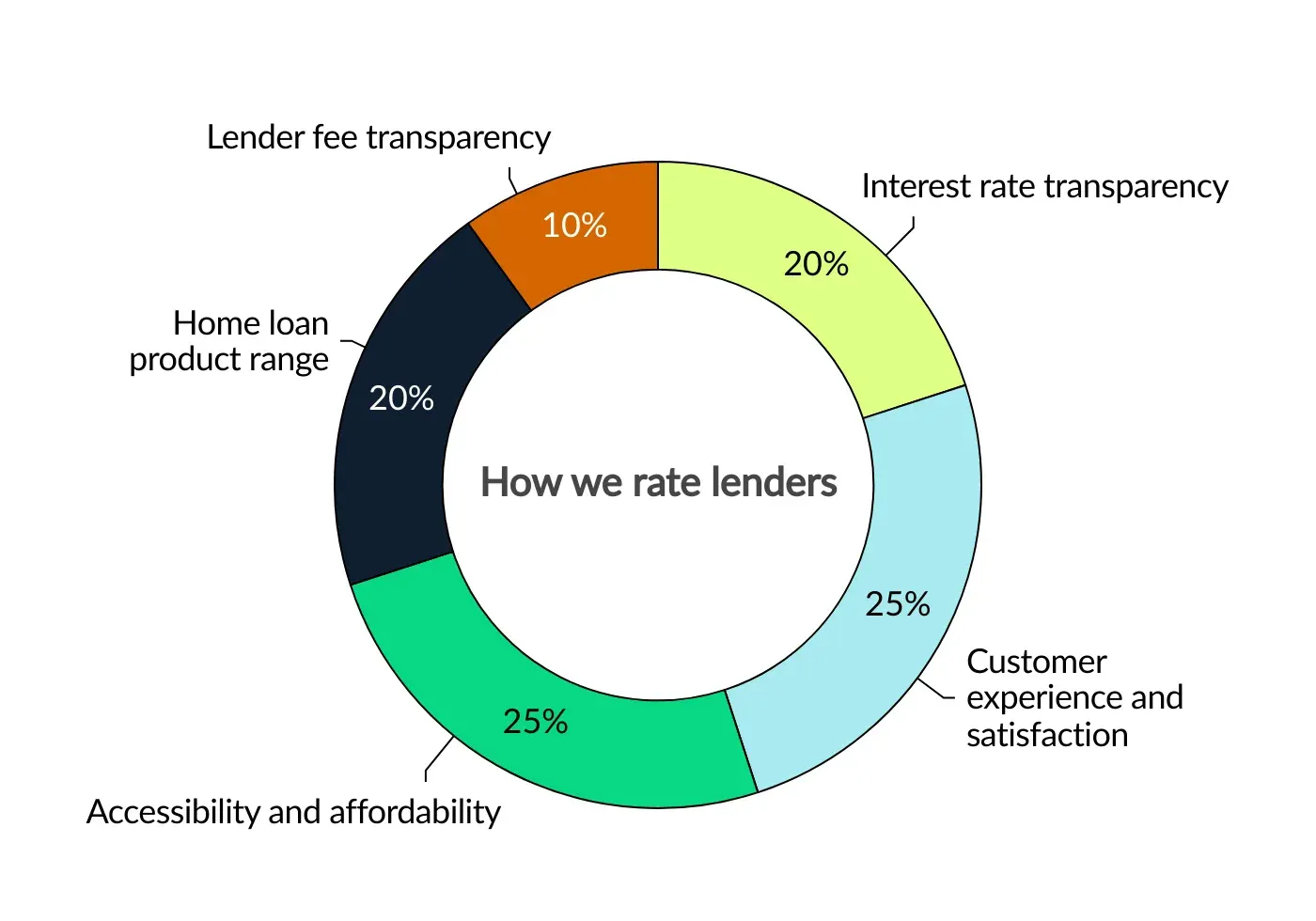
Accessibility and affordability account for 25% of the rating. LendingTree considers the geographic area a lender serves and whether borrowers can reach it outside standard business hours. It also looks at the maximum loan-to-value ratio, total loan costs and denial rate, with the latter measures informed by HMDA data.
These factors cover different parts of the borrowing experience. A broad service area can make a lender available to more households, while extended contact hours may help borrowers who can’t easily call during a standard workday. Loan-to-value limits relate to how much of a property’s value a lender may finance. Costs and denial rates add measures of affordability and access, though a published lender-level result doesn’t determine an individual borrower’s outcome.
LendingTree also records whether a lender offers special discounts and has physical branches in at least 10 states. The methodology says that lacking either feature does not lower a lender’s score. That distinction matters: the review tracks these amenities, but doesn’t treat them as required advantages.

Customer experience is equally weighted
Customer experience and satisfaction also account for 25%. The review checks whether borrowers can use a mobile app to manage both their application and their loan after closing. It also considers whether a lender offers at least three ways to make contact and how it rates on consumer review platforms.
The category covers service before and after a loan closes, rather than focusing only on the application process. A mobile app may support routine account tasks, while multiple contact options give borrowers different ways to seek help. Consumer reviews add another view of the experience, although the source doesn’t describe how reviews from different platforms are combined.
LendingTree also notes recognition it has given a lender during the previous 12 months. A lender without recent recognition won’t receive a lower score for that reason. As with discounts and branch coverage, the methodology distinguishes between tracking a feature and penalizing its absence.
Loan breadth accounts for 20%
Home loan product range makes up 20% of the rating. LendingTree checks whether a lender offers conventional mortgages, FHA loans, VA loans, home equity loans and home equity lines of credit (HELOCs).
The review also looks for programs aimed at first-time homebuyers, including lower-down-payment options and help with closing costs. Specialized offerings such as USDA loans, jumbo loans and physician loans count as well. The range can indicate how many types of borrowers a lender may serve, but the score alone doesn’t establish that a particular product is available to every applicant.
For borrowers, breadth can reduce the need to search across multiple providers when their circumstances call for a less common loan type. It also makes product availability visible in the comparison. The methodology gives this category a smaller share than access and customer experience, but it still makes up a fifth of the total rating.
Rate and fee disclosure round out the method
Interest rate transparency accounts for 20%. LendingTree checks whether rates are published online, how many loan types have rates listed and whether a borrower can adjust estimates using details such as credit score or location. It also compares lender rates with national averages using HMDA data.
Published rates can help borrowers begin a comparison, but the usefulness of a displayed figure depends on the loan types and borrower details it covers. LendingTree’s method recognizes this by considering both the scope of the posted rates and the ability to customize estimates. The source does not describe the comparison period, the exact calculation or how much rate differences affect a lender’s score within the category.
Lender fee transparency accounts for the remaining 10%. The review considers how fully a lender discloses mortgage origination fees and uses HMDA data to assess total loan costs. Together, the rate and fee categories account for 30% of the score, placing disclosure alongside service, access and product availability as part of the comparison.
What a rating can and cannot show
The method gives readers a structured way to compare lender features, but the category weights shape what rises to the top. Access and customer experience together account for half of the score, while rates and loan range each carry 20%, and fee transparency carries 10%. A strong overall rating therefore reflects LendingTree’s chosen balance of service, reach, products and disclosure.
The source says ratings are independently determined and based on the same criteria for lenders that do and don’t work with LendingTree. It also says the editorial team aims for consistent and fair reviews. However, the scoring details provided here don’t include category-level point thresholds, the full treatment of individual HMDA measures or how conflicting information is resolved.
LendingTree’s compensation disclosure says companies whose listings appear on its site pay it, and that compensation may affect listing order or placement. The site also says it does not include every company or product. That disclosure concerns how listings appear; the methodology separately states that lenders cannot purchase rating points or remove unfavorable findings. Readers can use the scores to identify differences worth examining, then compare the terms and costs available for their own borrowing needs.