Liverpool’s £5.5 Billion Valuation Shows How Football Ownership Has Changed
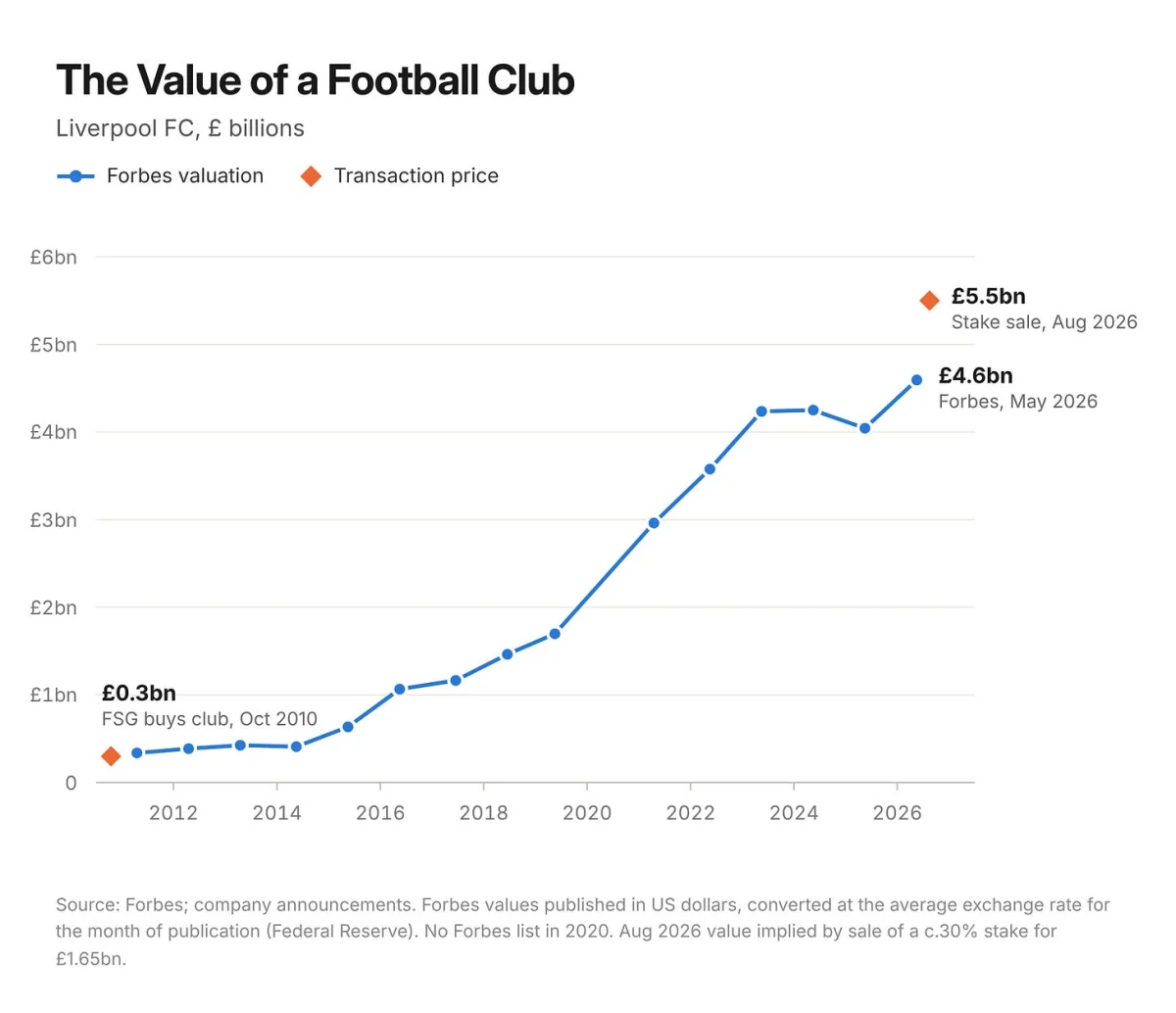
Liverpool’s valuation has risen from £125 million to about £5.5 billion as private capital reshapes who can afford top-flight clubs.
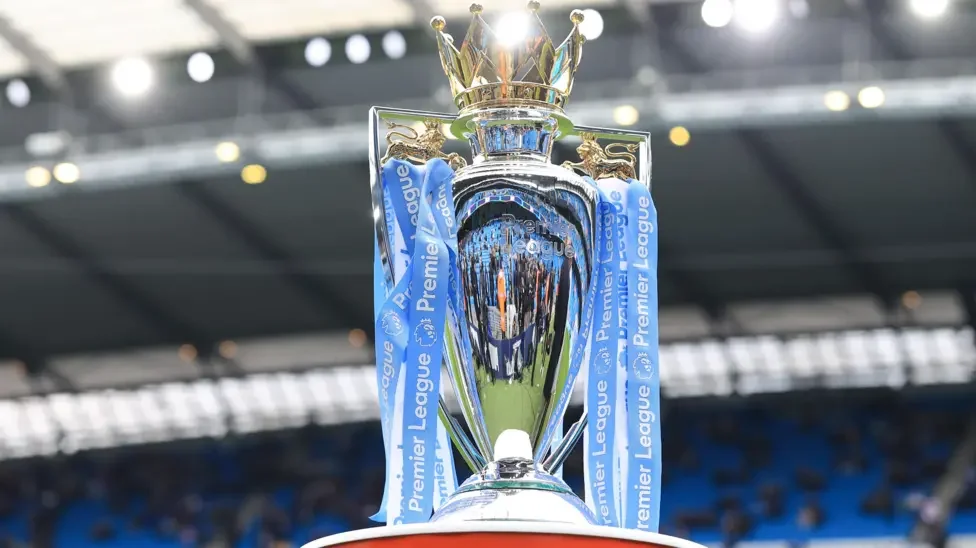
Liverpool’s rise from a £125 million club in 1996 to a business valued at about £5.5 billion shows how sharply the economics of football ownership have shifted. The change has widened the pool of capital involved in clubs while putting local, wealthy supporters increasingly out of reach of ownership.
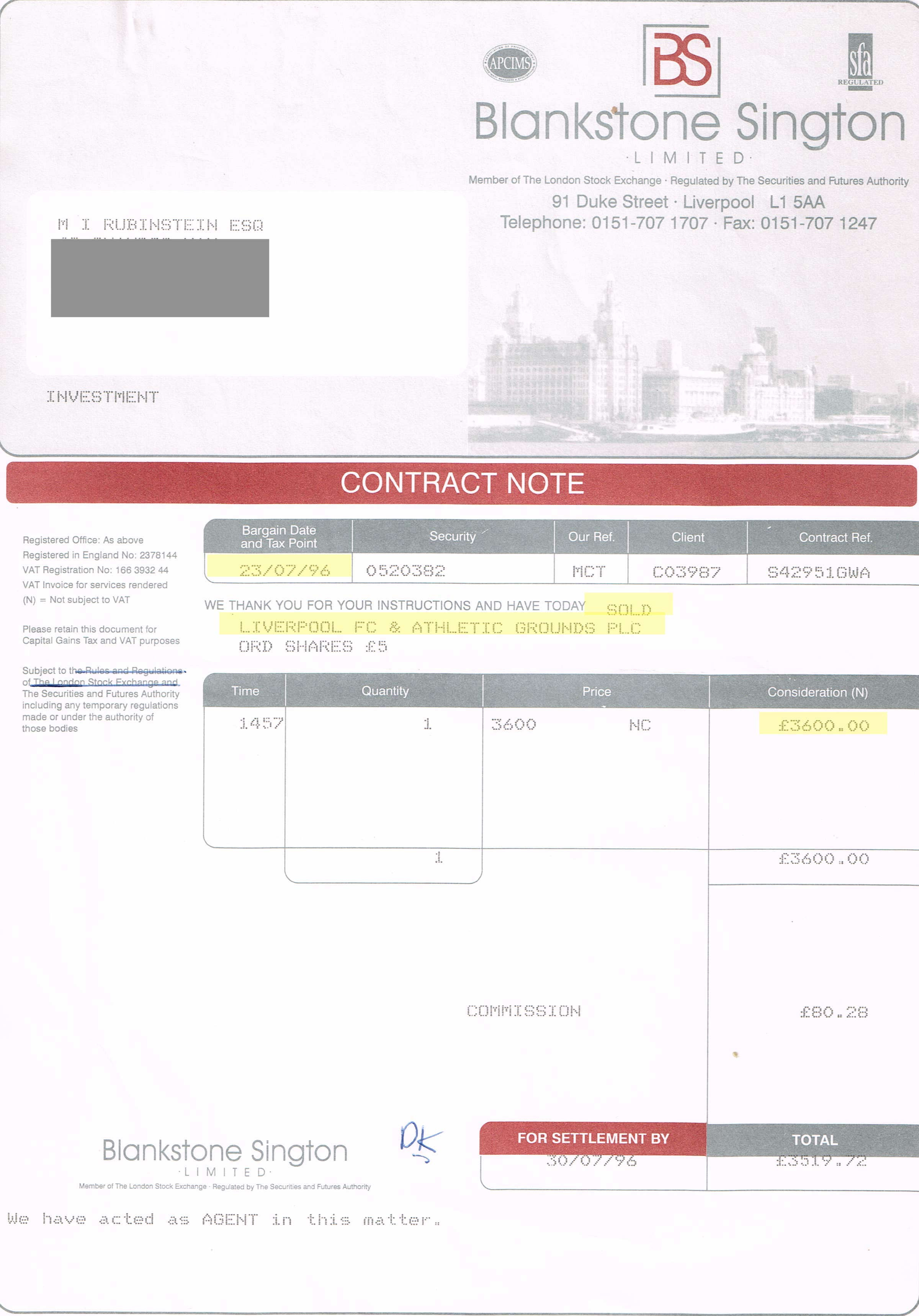
I got a small stake in that market in 1996. Liverpool was then majority-owned by the Moores family, whose fortune came from Littlewoods retail and football betting. Chairman David Moores held 51% of the club, while a small group of shares remained with individual investors and supporters. Those stakes had circulated privately for generations and were difficult to transfer.
A London broker had opened a platform in 1991 to trade unquoted stocks over the counter under Stock Exchange rules. Liverpool FC and Athletic Grounds PLC became one of its best-known markets. After placing a buy order through my broker, I was matched with a seller. I paid £1950, plus commission of 2.2%, for one share.
The timing helped. Moores later recalled that football was “incredibly unfashionable” before Euro 96. England’s hosting of the tournament that summer changed the mood, and within months my share had doubled in value. I had just bought my first home and sold to meet the resulting budget pressures. In hindsight, that sale looks like a missed chance, though the price itself was well timed.
The club’s later ownership changes put the trade in perspective. In 2007, Tom Hicks and George Gillett bought Liverpool for £5000 a share, valuing the equity at £174 million, or £219 million including £45 million of debt they took on. The share price had stayed below my sale price for more than a decade before that takeover interest. In 2010, Fenway Sports Group, the owners of the Red Sox, bought the club at a valuation of £300 million. Liverpool’s valuation then climbed steadily during FSG’s ownership. In August, FSG sold a 38% stake to 1892 Holdings at a valuation of about £5.5 billion ($7.3 billion).
My larger regret was what came with the share. To buy out minority holders, Hicks and Gillett offered individual shareholders priority access to tickets for home cup matches and cup finals for life. Liverpool has appeared in nine cup finals in the past ten years alone, giving those rights value beyond the share price. Selling the stake meant giving up that access as well as any future participation in the club’s growth.
For Moores, ownership had involved more than a financial calculation. He said the arrival of overseas stars on high wages was changing the game and made him question whether he could keep funding the club. “The Abramovich era was upon us, and I knew that I could never compete,” he said. The costs and scale of the market have since moved beyond even that comparison.
In 2010, every member of the Forbes 400 had enough wealth to buy Liverpool for less than half their net worth. Today, despite the increase in global wealth since then, only 88 members could do so. That comparison speaks to the extraordinary rise in club valuations: ownership has become harder to finance even for the very rich.
Institutional capital is helping fill the gap. The International Centre for Sports Studies estimates that private capital has a stake in one-fifth of the 92 clubs across the Premier League, the EFL Championship and EFL Leagues One and Two, up from 8% in 2010. In the Premier League alone, the share is 40%.
Private equity firms are building ways to invest across sports. KKR acquired Arctos Partners to establish a presence in the sector, while Apollo launched Apollo Sports Capital as a separate business. Sixth Street, TPG and Avenue have also raised funds for sports investments over the past year.
The estimates of the opportunity vary widely. Apollo’s Al Tylis puts the market across leagues, venues, media, merchandise, fitness and live events at $2.5 trillion. KKR’s estimate of the addressable market is narrower, at $650 billion, but it also describes the sector as undercapitalized. KKR estimates that private capital accounts for just 2% of sports investment.
The shift is visible in English football, where Clearlake Capital took full control of Chelsea at a valuation of £5 billion, equivalent to $6.7 billion. Silver Lake, an investor in Manchester City, will be watching how that ownership develops. Meanwhile, the use of sovereign wealth to finance clubs faces greater scrutiny, with controversy around Abu Dhabi’s ownership of Manchester City adding to the questions facing that source of capital.
Whether football can deliver the returns institutional investors expect remains an open question. Moores’ own caution still applies: “If we’d have done it as an ‘investment’ we’d have come unstuck pretty quickly.” The market has changed enormously since his tenure, but valuation growth alone doesn’t settle the economics. Investors will need to weigh operating costs, funding needs and the value of access to supporters against the scarcity and global reach that make clubs so attractive to capital.