AI Infrastructure’s Capital Race Puts CoreWeave’s Financing Model Under Pressure
CoreWeave’s expansion depends on borrowing and customer leases, as rising debt costs test the economics of AI infrastructure.
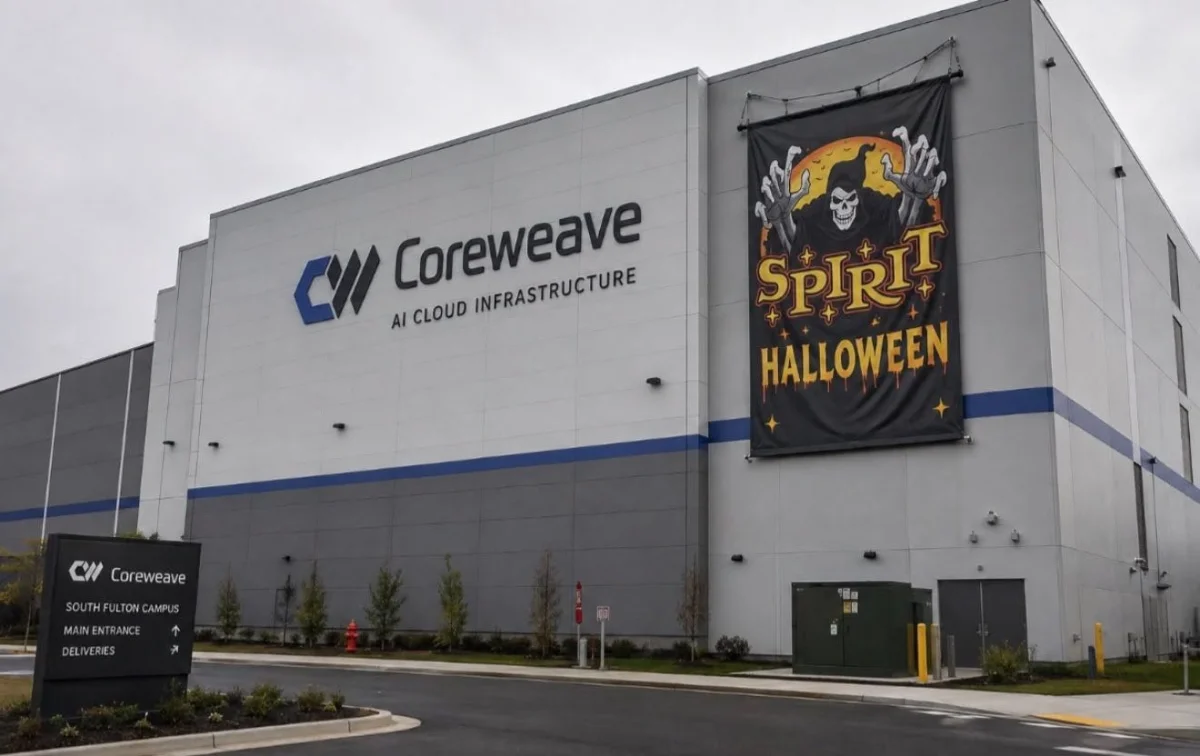
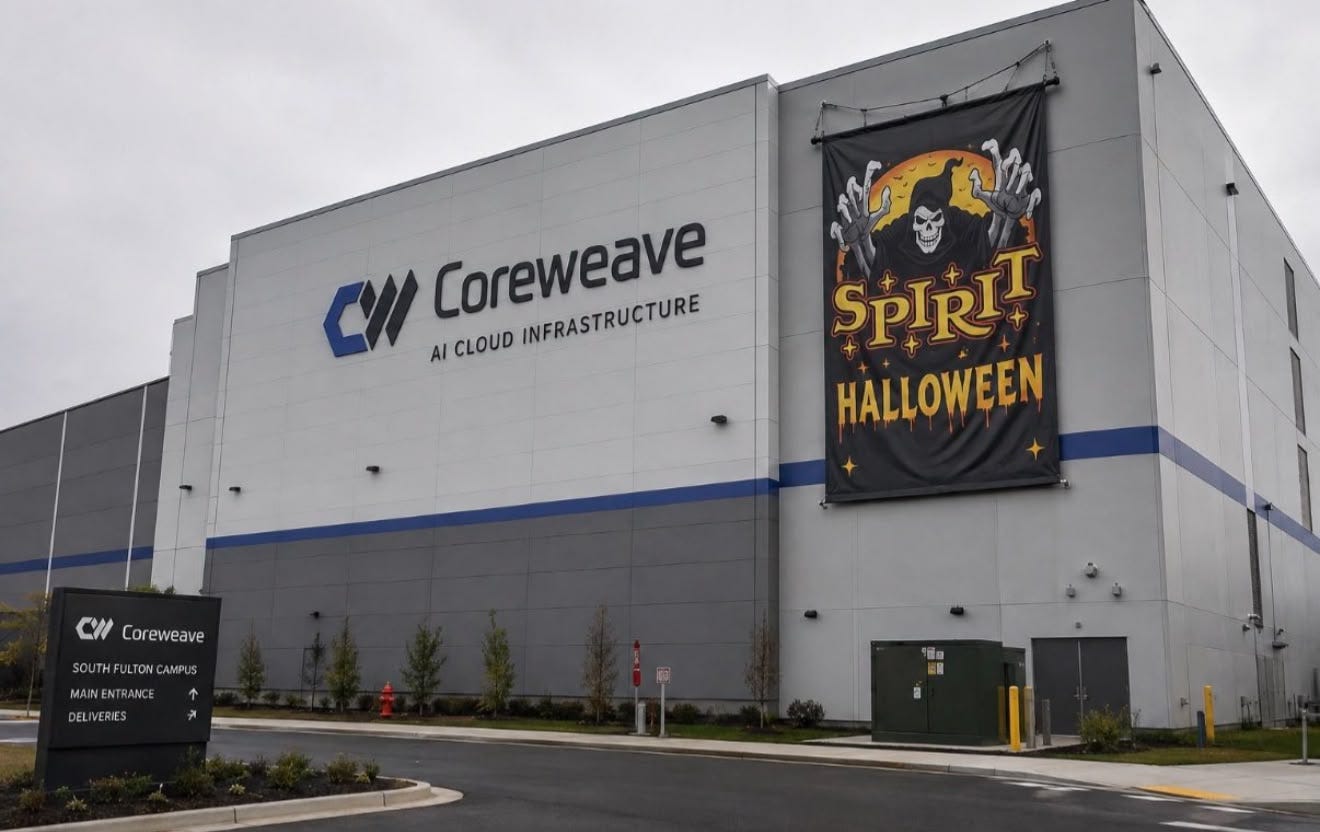
Artificial intelligence’s infrastructure boom is becoming a test of financing as much as technology. CoreWeave’s rapid growth shows why: building data centers and securing computing capacity requires enormous upfront spending, while the returns depend on customers continuing to lease that capacity at prices that cover the cost of funding it.
The shift is visible across major technology companies. Their operating cash flow covered capital investment through 2025, but that ceased to be true this year. Meta has said it will “need to raise hundreds of billions of dollars [of equity] over a period of several years beginning as early as fall 2026.” That scale of expected funding shows how far the buildout has moved beyond what existing cash generation can support.
Mike Intrator, CoreWeave’s CEO, has described the risk of a mismatch between markets and emerging technology: “When you are building a new type of technology company, there will be periods of time when the market misunderstands and acts irrationally.” Morgan Stanley CEO Ted Pick offered a related caution: “Sometimes the technology will be ahead of what the market will accept, and sometimes vice versa, and we have to be cognizant of what the market will accept at a given time.” The remarks capture the tension facing companies that need continued access to funding while their business models are still developing. “Yikes,” was Elon Musk’s response.
Capital access as a competitive edge
Musk’s SpaceX offering in June illustrates how access to capital can shape a company’s position. The company raised $85.7 billion of equity, adding substantial funding and strengthening its balance sheet. That stronger position then helped it obtain investment-grade credit ratings and raise a further $25 billion through bonds. The sequence matters: equity can provide a base of capital and support borrowing, while debt can add another source of funding for expansion.
Musk has cultivated investors willing to finance his companies and has shown a keen sense of how markets can be used to support ambitious plans. That advantage is especially relevant in a sector where spending needs arrive well before the infrastructure can generate revenue. Companies able to raise capital on favorable terms can move faster; those facing higher borrowing costs may find that the same expansion becomes harder to sustain.
CoreWeave’s growth depends on the funding spread
CoreWeave was founded in 2017 by Intrator, Chief Strategy Officer Brian Venturo and Chief Development Officer Brannin McBee. The business began as an Ethereum mining operation in Venturo’s grandfather’s garage. After crypto’s collapse in 2019, the company pivoted to GPU cloud services.
It now runs 51 data centers across the US and Europe, drawing 1.5 gigawatts of power and leasing computing capacity to customers including Microsoft, OpenAI and Meta. The company had contracts to deliver 2.9 gigawatts of computing power when previously examined last November. Since then, that figure has reached 4.2 gigawatts. The pace of contracted growth points to strong demand, while also raising the amount of infrastructure and funding required to meet commitments.
CoreWeave describes itself as “The Essential Cloud for AI™,” but its business also functions as a conduit between capital markets and AI customers. The company expects to spend between $35 billion and $39 billion in 2026 alone to expand. That outlay must be financed before the new infrastructure can earn revenue. The basic economic test is whether CoreWeave can lease deployed GPUs to customers at rates that exceed the cost of the capital used to acquire and operate them.
That gap, or spread, is central to the model. If customer revenue remains high enough relative to financing costs, borrowing can support further capacity and growth. If the spread narrows, each expansion adds less economic value, and the funding needed to maintain growth can become more difficult to justify. The model therefore depends on both customer demand and lenders’ willingness to provide capital at costs the business can absorb.
Debt costs put the model under scrutiny
CoreWeave’s financing conditions have worsened: yields on its unsecured debt have reached 15%, while its stock has fallen. Higher yields mean investors are demanding greater compensation to hold the company’s debt. That raises the cost of new borrowing and can make refinancing existing obligations more expensive. A falling share price can also complicate efforts to raise equity, since issuing shares may bring in less capital for each share sold.
This combination makes CoreWeave’s position sensitive to the mood of capital markets. Its spending plans are large, and the infrastructure takes funding to build before it can serve customers. A company with this structure can be exposed to changes in financing terms even when demand for its services remains strong. Demand alone does not settle whether each new deployment earns enough to cover its full cost.
Calling CoreWeave a non-bank financial highlights that dependence. It borrows or otherwise raises capital, commits funds to assets, then relies on customer payments to support the economics. That structure can work when financing remains available and the returns on deployed capacity exceed its costs. It becomes more fragile when lenders demand higher yields, equity financing grows less attractive or customer economics fail to keep pace.
CoreWeave’s difficulties appeared before strains across the wider AI complex, making its borrowing costs a useful signal of how investors are assessing the boom’s financing risk. The company’s 4.2 gigawatts of contracted computing capacity and planned spending of $35 billion to $39 billion in 2026 convey the scale of its growth ambitions. The 15% yield on unsecured debt conveys the pressure attached to funding them. The next test is whether customer leases can continue to support expansion as capital becomes more expensive.