AI-Built Free Apps Put Adobe’s Subscription Model Under New Pressure
A developer says AI helped build 13 free software projects, including Adobe alternatives, raising questions about the durability of subscription pricing.
Adobe’s subscription model faces a new kind of challenge: software built with AI that aims to reproduce the tools customers rent from established vendors. Developer Brandon Thomas says he used AI to create a growing set of free, open source apps, including alternatives to several Adobe products. The projects are early and incomplete, but their pace of development puts a sharper question on the table: how much protection does a proprietary software suite retain when AI can help smaller teams build competing tools?
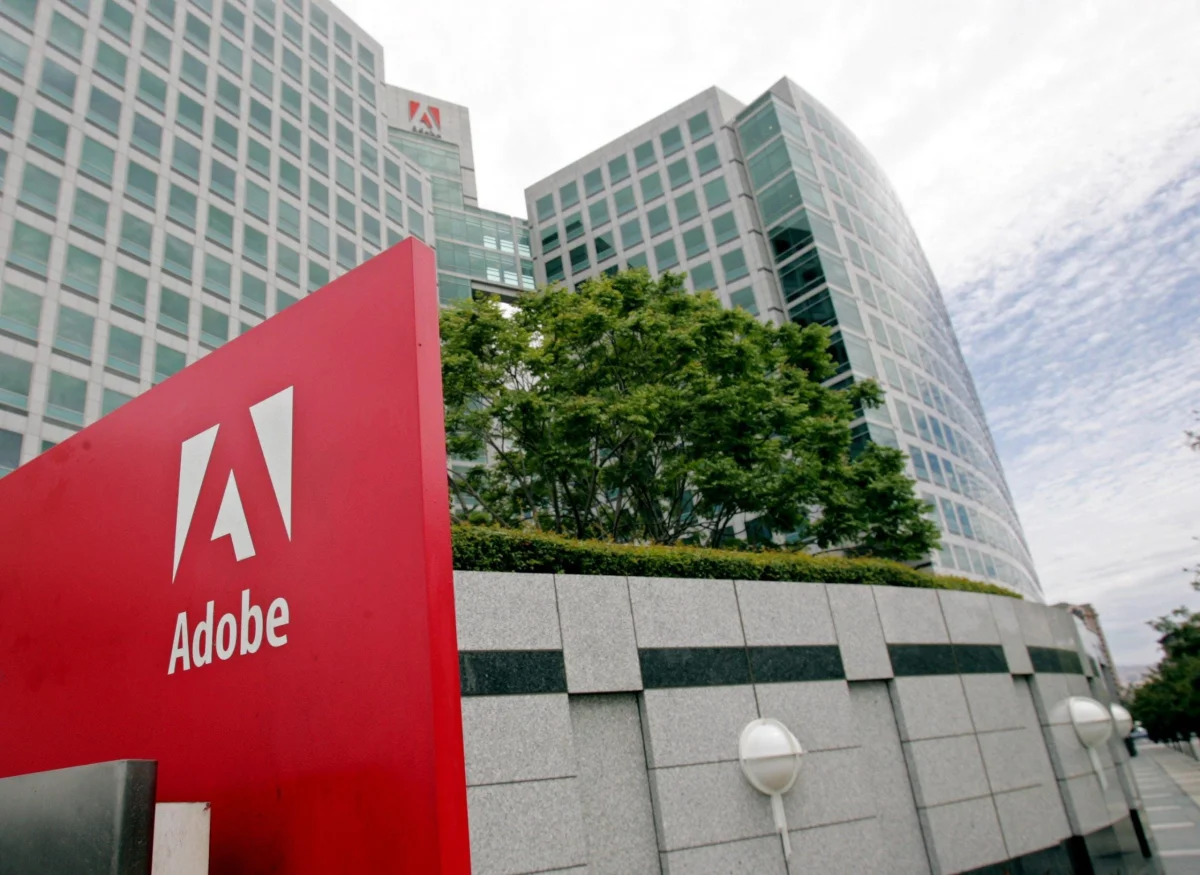
Adobe Systems headquarters in San Jose, Calif. (AP Photo/Paul Sakuma)
Subscription revenue meets a new competitor
Adobe’s products have shifted from one-time purchases to recurring charges. Photoshop costs $22.99/month as a standalone subscription, or $19.99/month through the Photography plan, which also includes Lightroom and 1 TB of cloud storage. The Creative Cloud plan is listed at $70 per month before discounts.
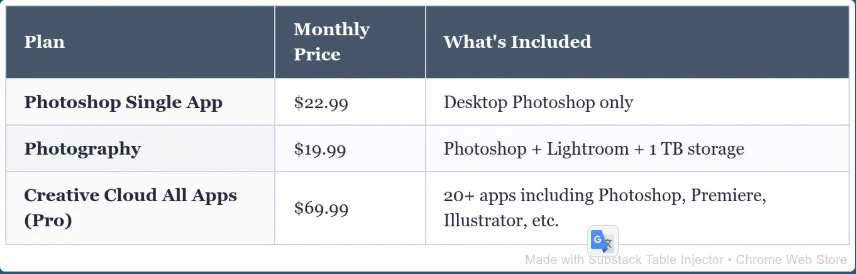
Adobe Photoshop 2026 pricing options
The last Photoshop version that customers could buy outright was released in 2012, according to the source. Acrobat’s last perpetual version arrived in 2020 and reached end of life last year. That change matters to people who rely on these applications: recurring access keeps software current, but it also means continued use depends on ongoing payments.

The author frames this shift as rent rather than ownership, arguing that software subscriptions give vendors a continuing stream of revenue after a customer has adopted a product. That model can be attractive to software companies, but it also creates an opening for lower-cost alternatives. If a free tool can cover enough of a user’s day-to-day work, the value of a paid bundle becomes harder to justify.
AI speeds up software development
AI can help large software firms build and update products with less human effort. The same capability may also lower the time and expertise needed to create competing applications. That’s the central tension in this story: a tool that can make incumbent companies more productive can also help developers challenge them.
Thomas began work on the project on September 30 and released an initial version one week later, according to the source. He used Anthropic’s Claude Opus 5.5 to help build the software in Rust, with WebAssembly versions that can run in a browser. The work is described as a clean-room effort, meaning the applications were recreated without using Adobe’s source code.
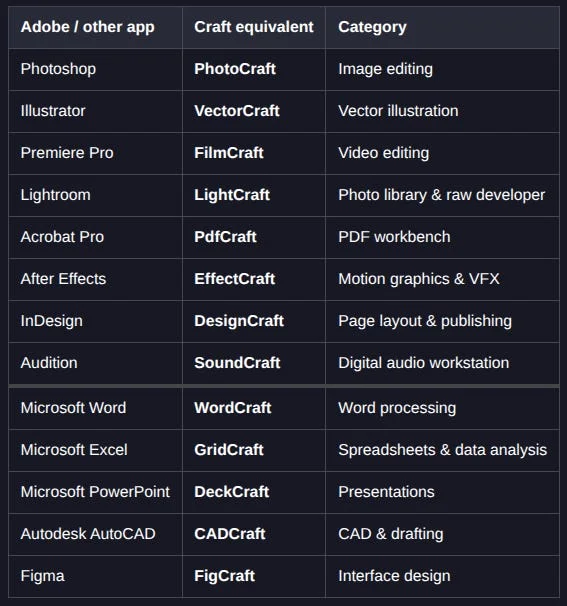
The project grew out of ArtCraft, which began as a tool for precise editing of AI-generated images and video. Its new software suite initially aimed to reproduce the interfaces and functions of seven Adobe applications: Photoshop, Illustrator, Premiere, Lightroom, After Effects, InDesign and Acrobat Pro.
Ars Technica’s report describes the apps as ambitious, free and far from finished. Users have pointed out shortcomings, while Thomas has made aggressive claims about how quickly the software could improve. He first said the team would reach 100% feature parity within a month. Days later, he said 99% parity would take months rather than years.
Those are targets, not demonstrated results. Feature parity is also a high bar: matching a visible interface does not establish that an app can handle the full range of professional tasks, workflows and file formats that users expect from mature software. The current state of the projects will matter more to potential adopters than the speed of their initial release.
The project has expanded beyond Adobe
The source says the Crafting Apps collection now has 13 products: eight from Adobe, three from Microsoft, and one each from Autodesk and Figma. That broader reach suggests the team is testing whether AI-assisted development can be applied across several established software categories, though the projects’ maturity and capabilities may vary.
The project naming can be confusing. ArtCraft refers to the team and its broader work, as well as a separate AI studio app that is not a software clone. The standalone product is available at getartcraft.com. The Crafting Apps collection, meanwhile, can be browsed at its app page.
Users who want to install the collection together can download the launcher. The source lists a Windows x64 installer at this link and a portable Windows package at this link. Builds for Windows, Mac and Linux are listed on the latest release page. Each app can also be installed separately, with platform-specific installers available from the app page.
What would make the challenge stick?
The prospect of free substitutes is significant, but the business impact depends on whether users find them dependable enough for regular work. Software is more than a list of features: customers also care about stability, compatibility, support and the cost of switching established workflows. A collection that reproduces familiar controls could reduce the friction of trying an alternative, while missing features or bugs could keep users on paid products.
For now, the strongest evidence is the speed with which Thomas says the first release was produced and the number of projects now listed. The source’s larger claim—that any offline commercial software can be replicated and distributed free—remains a sweeping prediction, not a proven outcome. The practical test will be whether the apps close their gaps and attract repeat users.
The source also points readers to a video, “Adobe Charged Him to Cancel. So He Rebuilt Adobe,” and invites users to share their experience with the software. For Adobe and other subscription vendors, sustained use of capable free alternatives would be a more consequential signal than an ambitious feature-parity deadline.