Gold and Silver Slide as Oil, Tech Losses Pressure Miners
Gold hit a one-year low and silver fell below $50 as rate concerns and tech selling weighed on metals and mining shares.
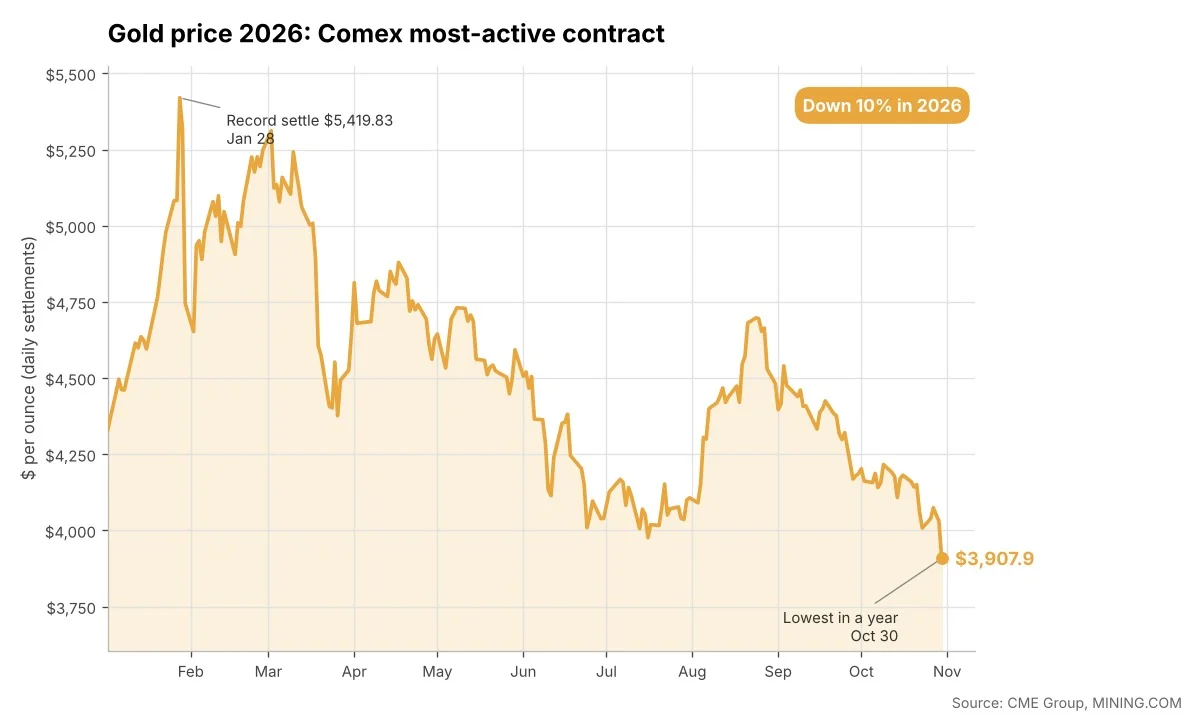
Gold’s drop to a one-year low and silver’s fall below $50 an ounce show how quickly pressure can spread across precious metals and their producers. Higher oil prices have revived concern about inflation and interest rates, while losses in technology shares have prompted investors to sell assets to cover losses elsewhere. Mining stocks fell even further than the metals, extending a sector pullback that has erased substantial market value.
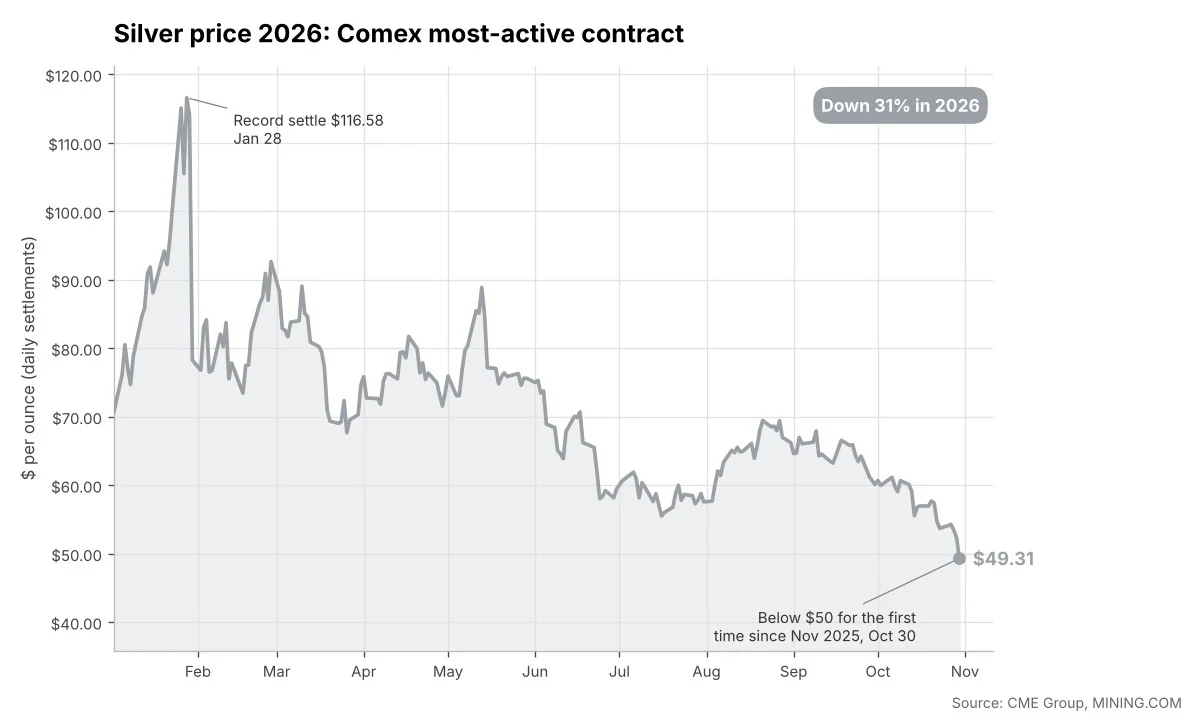
Spot gold fell as much as 3.2% to $3,891.67 an ounce on Friday, its lowest since Oct. 28 last year. By late morning in New York, it was down 2.7% at $3,910.53. December Comex futures dropped 3.1% to $3,907.90 after touching $3,900.90. A week earlier, gold had slipped below $4,000 for the first time since July.
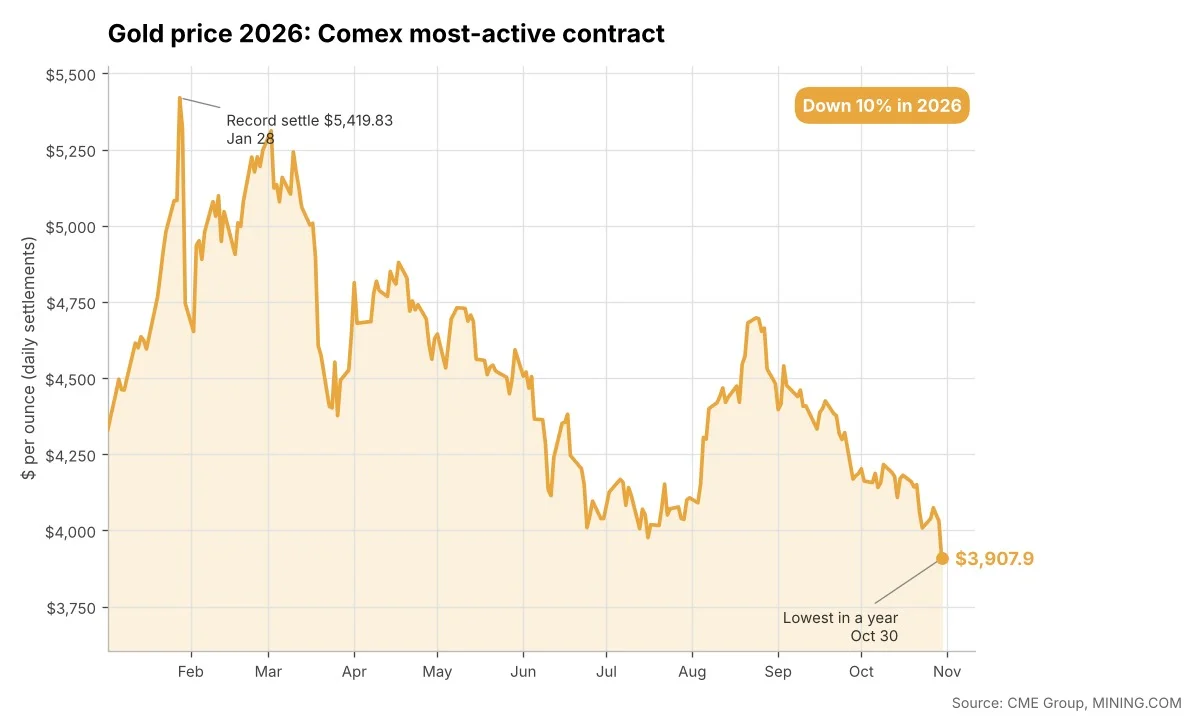
Silver’s decline was steeper. Spot prices fell 5.8% to $49.34 an ounce, marking the first move below $50 since November 2025. The metal is down roughly 18% this month and has surrendered the gains made since its early-December rally, which carried it above $120. December Comex futures fell as much as 6.3% to $49.08 and were last down 5.9% at $49.31.
Trading was heavy for that point in the session. By midday in New York, Comex futures represented a nominal 18 million ounces of gold and 236 million ounces of silver. That activity came as sellers faced pressure from both changing interest-rate expectations and falling prices in other markets.
Oil and technology shares add to selling pressure
Rising oil prices have strengthened expectations for another Federal Reserve rate increase. Brent crude reached its highest level since April, as oil headed toward a fourth consecutive monthly gain. Higher energy costs can add to inflation, making interest rates a greater concern for markets. The Federal Reserve and European Central Bank held rates this week but highlighted inflation risks tied to energy prices. US inflation accelerated in September, according to data released Thursday, and traders now see a more than 70% chance of a Federal Reserve hike in December.
“The indication was that the higher-for-longer theme prevails,” Peter Grant, senior metals strategist at Zaner Metals, told Reuters. He said inflation concerns are leading multiple central banks to maintain a hawkish stance. For gold, the prospect of higher rates matters because the metal doesn’t pay interest; expectations of better returns from interest-bearing assets can weigh on demand.
At the same time, technology shares led global stocks lower for a second day. Disappointing company results added to a shift away from artificial intelligence-related shares and toward Treasuries, with concern about spending on AI weighing on the Nasdaq. When investors need cash to cover losses or meet margin requirements, they may sell assets that were previously serving as a store of value, including gold and silver.
“Gold is getting caught up in the momentum,” Bart Melek, global head of commodity strategy at TD Securities, told Bloomberg. He said higher oil was supporting demand for Treasuries as investors sought safety, draining liquidity from stocks and bullion. Trend-following funds, he added, are testing long-term support levels in both metals. Commerzbank analysts said losses in technology stocks may have triggered margin calls and forced sales, while describing the precious-metals decline as exaggerated and maintaining an expectation of recovery.
Physical demand remains subdued
Buyers in key physical markets have yet to provide much support. Demand in India was subdued during the week, with buyers waiting in anticipation of lower prices, Reuters reported. Demand in China, the largest consumer, also remained muted. That contrasts with Asian investors’ purchases of gold-backed funds as North American investors sell them. The split points to different behavior among regions and types of buyers, but it hasn’t stopped prices from falling.
Gold was on track to lose about 6% in October, its worst monthly performance for October since 2008 and a second consecutive monthly decline. It now trades about 28% below its record close of $5,419.83 on January 28. Silver’s relative weakness has pushed the gold-silver ratio to its highest since December. Ole Hansen, head of commodity strategy at Saxo Bank, said that divergence highlights silver’s vulnerability compared with gold. He added that further selling by technically driven funds could open the way to prices in the mid-$40s. Platinum fell 4% to its lowest since September 2025, while palladium lost 3.1% to a June 2025 low.
Mining shares magnify the metals decline
Producers suffered larger losses than the metals on Friday. Many companies in the sector are now a third or more below highs set earlier this year, following a third-quarter slump that removed $264 billion from the value of the world’s 50 largest miners. Falling metal prices can pressure revenue expectations, while mining shares can also reflect company-specific costs and operating concerns.
Newmont, the largest gold miner, fell 5% by late morning in New York, bringing its market value to $110 billion and leaving the stock more than 20% below its 52-week high. Agnico Eagle Mines lost 6.7% to a valuation of $83 billion, while Barrick Mining fell 5% to $60 billion. Both were roughly a third below their peaks, and Barrick was down almost 16% for the year. Wheaton Precious Metals, the largest streaming company, declined 5.1% and sat 30% below its high. Franco-Nevada lost 2.2%, the smallest drop among this group, and was 21% below its peak.
Kinross Gold was the weakest of the major producers, sliding 7.7% to near its 52-week low. It has fallen 17% in October alone, lost half its value from its high and was valued at $23 billion. Alamos Gold dropped 5.2% a day after delaying a shaft at its Island Gold mine as costs rose. The stock was at a 52-week low, roughly half its peak. Harmony Gold fell 7%, Gold Fields 6%, and AngloGold Ashanti 5.8%; all three were about 40% below their highs. Eldorado Gold lost 4%, adding to Thursday’s decline after an 18% cut to its gold outlook.
Combined, Newmont, Agnico, Barrick, Wheaton and Franco-Nevada have lost almost $140 billion in market value from their 52-week highs. Agnico alone accounts for more than $40 billion of that decline. The figure captures the scale of the retreat among North America’s five most valuable gold companies, though the losses have not been uniform across producers or time periods.
Silver miners have taken an especially hard hit. Hecla Mining fell 6% Friday and is down 60% from its 52-week high, with a market capitalization of $9 billion. Coeur Mining dropped 6.2% to a valuation of $13.5 billion, down 25% in October and 53% from its peak. First Majestic Silver lost 6%, leaving it more than half below its high. Pan American Silver fell 6.3%; the Vancouver-based miner was valued at $16 billion, 44% below its high.
The longer view offers a different picture for some gold producers: Newmont remains up a third over the past 12 months and Barrick is up 15%. Kinross, by contrast, is down 14% from a year ago, while Coeur has fallen 28%. The next test for metals and miners is whether oil-driven rate concerns and forced selling continue to dominate, or whether physical demand and price stabilization can check the slide.